The Complete Guide to corporate event photography
The short answer
Corporate event photography differs from general event coverage because every image must serve a business purpose. That means planning shot lists around sponsor obligations, executive portrait needs, and marketing deliverables before the event begins. A qualified corporate photographer understands brand guidelines, works invisibly during keynotes, and delivers edited assets quickly enough to fuel post-event campaigns and stakeholder reports.
What Makes Corporate Event Photography Different from Other Event Coverage
Your board members expect professional documentation that reflects the caliber of your organization. That means understanding brand guidelines before the first attendee walks in.
Corporate event photography refers to the strategic documentation of business gatherings, conferences, and professional functions in a way that serves specific organizational objectives rather than simply capturing candid moments. This approach means that every frame is planned around deliverables: sponsor visibility, executive portraits, and campaign-ready content for your marketing team.
We've covered 200+ corporate events across Nashville's convention circuit. The difference between corporate and social event photography starts with accountability. Your sponsors paid for visibility. Your executives need professional headshots for LinkedIn. Your marketing team needs content that actually works in campaigns.
Corporate events require strategic shot planning around business objectives. While wedding photographers chase emotional moments, corporate event coverage involves documenting ROI. Every image needs to serve a purpose beyond the event itself. According to Event Photography Trends 2025 in Review, event teams are placing a growing premium on images that perform across digital channels long after an event ends.
The technical demands are different too. Convention halls present lighting challenges that require fast prime lenses and energy-efficient flash systems. You can't disrupt a keynote with loud equipment or intrusive positioning. A single multi-day conference might span 3 or more shooting sessions across dozens of breakout rooms, requiring a photographer who can adapt within seconds, not minutes.
Why the Shot List Matters More Than the Camera
Most events run on tight schedules, sometimes with keynote windows as short as 45 minutes and networking receptions that wrap in under 2 hours. Without a pre-event shot list tied to your specific deliverables, even the best camera gear won't save a missed sponsor banner or an overlooked executive moment. That planning step is what separates a strategic partner from someone who simply shows up with a camera.
How to Plan Your Corporate Event Photography Strategy
Start with stakeholder requirements at least 3 weeks before your event. Who needs what deliverables? Your sponsors want booth traffic documentation. Your executives need professional portraits. Your marketing team wants networking shots that don't look staged.
A solid corporate event photography strategy refers to a coordinated plan that maps specific shot priorities to your event schedule, stakeholder needs, and brand guidelines before a single shutter fires. That planning work is what separates usable images from a folder of random moments nobody asked for.
Create detailed shot lists synchronized to your event schedule. We use templates that map photography priorities to specific time blocks. Keynote speakers get documented during their presentations and immediately after for sponsor recap materials. For a typical full-day conference, that approach means coverage across at least 4 distinct time blocks: arrival and registration, general session, breakout rooms, and networking receptions.
Brief your photographer on brand guidelines and sponsor obligations. Share your event agenda with VIP moments clearly marked. Include a floor plan showing sponsor booth locations and networking zones that need consistent coverage. This step involves walking through every sponsor deliverable so nothing gets missed when the room fills up and things move fast.
According to Corporate Photography Trends 2025 from Accio, authenticity and editorial-style coverage are now the dominant expectation for corporate clients, which means candid networking shots and real expressions carry more value than posed group lineups.
The Event Photography Tips guide from Cvent covers additional planning frameworks that work well for multi-day conventions.
Your photographer should walk the venue before your event starts. We scout lighting conditions, identify optimal positioning for keynote coverage, and coordinate with AV teams to avoid equipment conflicts. That pre-event scout typically takes 30 to 60 minutes and saves hours of reactive problem-solving once guests arrive.
What a Pre-Event Photography Brief Should Cover
A thorough brief is a practice that keeps every stakeholder aligned before the first guest walks in. At minimum it should include: your run-of-show with hard start times, a list of named VIPs and speakers, sponsor booth numbers and priority order, brand color and logo usage guidelines, and your image delivery deadline. When that information is in one document, your photographer can build a shot list that covers all 5 of those categories without a single follow-up call during the event itself.
What Does a Corporate Event Photographer Actually Deliver?
The deliverables depend on what you scoped, but a well-planned engagement typically produces at least 3 distinct asset types: edited stills for press and sponsor use, social-ready crops sized for LinkedIn and Instagram, and speaker portraits suitable for post-event marketing. For a 2-day convention, that can translate to several hundred final selects organized by session and delivered within 48 to 72 hours of your event closing.
Turnaround time matters because your sponsors and PR team often need images within 24 hours of a keynote wrapping. Building that deadline into the brief, not just the contract, keeps everyone on the same page from day 1.
How Many Photographers Does Your Event Need?
A single-room half-day meeting can run well with 1 photographer. A multi-track conference with 3 or more simultaneous breakout sessions, a trade show floor, and a networking reception running in parallel typically requires at least 2 photographers working coordinated zones. Adding a second shooter is the most reliable way to guarantee that a sponsor activation happening in Hall B gets documented at the same moment your keynote is being captured in the main ballroom. Our corporate event coverage service is built around that kind of zone-based coordination for larger footprints.
For events at larger Nashville venues like the Music City Center or Gaylord Opryland, planning for at least 2 coverage zones from the start prevents the gaps that frustrate sponsors after the fact.
Essential Corporate Event Photography Techniques for Professional Results
Convention halls demand specific technical approaches. Music City Center's exhibit halls require fast prime lenses and careful flash positioning to avoid harsh shadows across booth displays. Nashville hosts dozens of major conventions each year, and each venue presents its own lighting challenges that a photographer needs to solve before the first session begins.
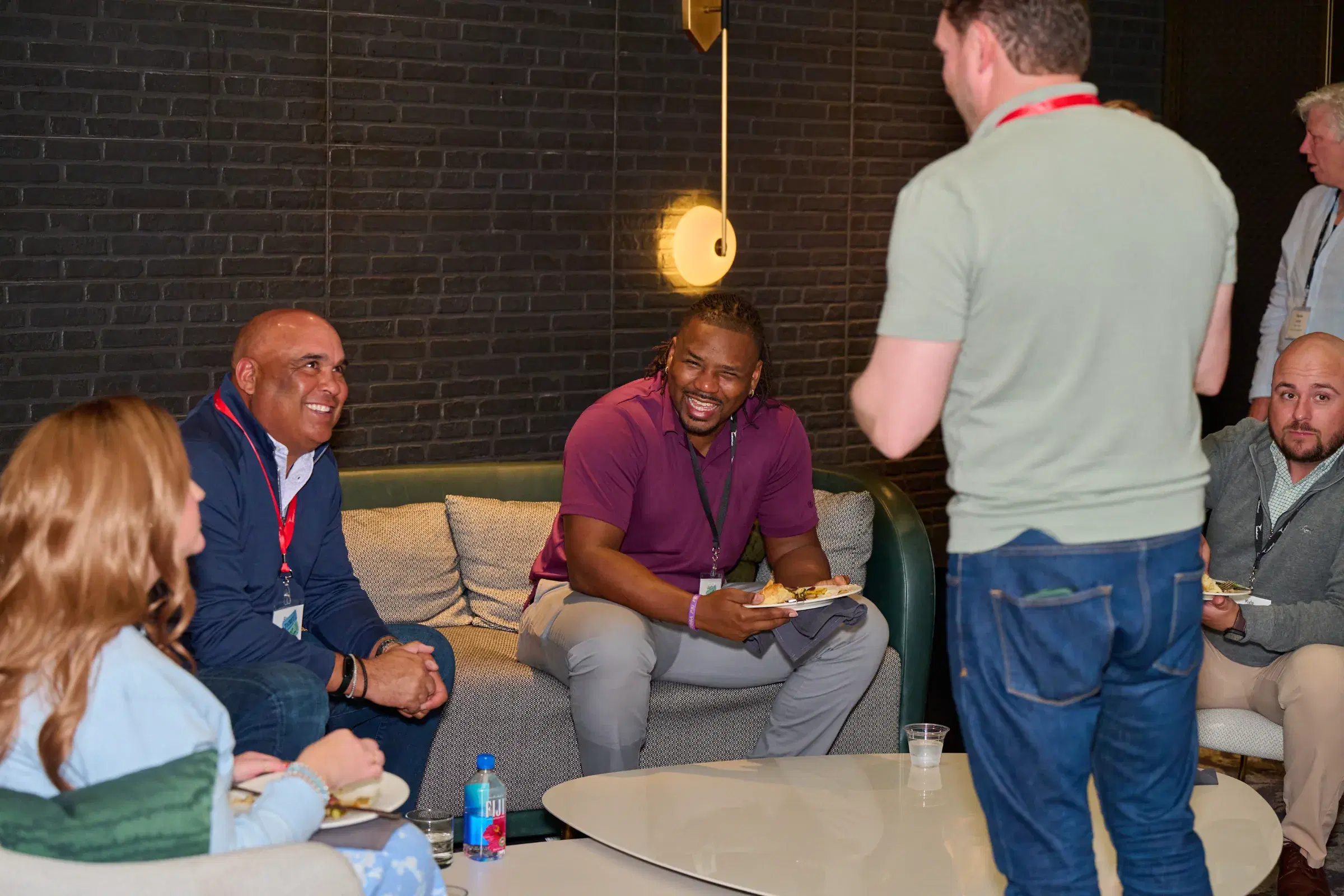
Authentic networking photography involves capturing genuine interactions without staging awkward group poses. We use longer focal lengths to document conversations naturally while maintaining professional distance. This approach means that attendees stay relaxed and the resulting images feel like real moments rather than posed publicity shots.
Multi-camera coordination is a technique that refers to deploying 2 or more operators in distinct roles across a single event. One operator covers in-person networking while another captures presentation slides and speaker reactions for virtual attendees. For hybrid events drawing both on-site and remote audiences, this split coverage is the difference between a complete visual record and a partial one.
Low-light expertise separates professional corporate photographers from general event coverage. We shoot at ISO 3200+ while maintaining image quality that works in sponsor recap materials and executive portraits. Nashville's most popular conference venues, including those listed in this overview of top conference venues in Nashville, range from ballrooms with dim ambient light to glass-walled atriums flooded with midday sun. A single approach won't work across all of them.
What Invisible Operation Looks Like in Practice
The key is invisible operation. Your attendees shouldn't notice the photography happening. Your speakers shouldn't adjust their presentations around camera positioning. This means positioning cameras at least 10 to 15 feet from the stage during keynotes, using silent shutter modes wherever the venue acoustics amplify sound, and pre-scouting the room at least 30 minutes before doors open.
Frederic Paulussen's corporate photography guide provides additional technical insights for challenging venue conditions, including advice on managing mixed light sources that are common in large exhibit halls. Our team reviews resources like this regularly because the technical side of corporate event coverage keeps evolving as venues update their lighting systems and events add more screens and LED displays.
How Venue Size Changes the Photography Plan
A 200-person seated dinner needs a very different deployment than a 2,000-person general session. Smaller rooms let 1 skilled photographer cover nearly everything. Larger rooms often require at least 2 operators stationed at opposite ends of the space, each responsible for specific zones. When exhibit halls stretch across 100,000 square feet or more, as they do at Music City Center, zone assignments keep coverage consistent from the first booth to the last. Getting the team size right from the start means nothing important goes undocumented.
Why Turnaround Time Matters as Much as the Shot?
Sponsors, speakers, and marketing teams all need images fast. A recap post that goes live 3 days after an event has far less reach than one published the same evening. We plan delivery timelines before the event starts, not after. For most single-day events, a curated gallery of edited selects is ready within 24 hours. Multi-day conferences with 3 or more days of programming are typically delivered in staggered batches so your team can start posting while coverage is still happening.
What Should You Look for in a Corporate Event Photographer?
Experience with your venue type matters more than a large portfolio of unrelated work. A photographer who has shot 10 trade shows has seen the lighting traps, the crowded aisles, and the last-minute schedule changes that derail less-prepared teams. Ask to see images from events similar in size and format to yours. Look for sharp speaker shots even under mixed stage lighting, candid crowd images that feel alive rather than stiff, and booth or signage photos that are usable in actual marketing materials. Those 3 criteria tell you more than any highlight reel.
Why Nashville Corporate Events Require Specialized Local Expertise
Nashville's corporate event landscape presents unique opportunities and challenges that a generalist photographer simply isn't prepared for. Music City Center's vast exhibit halls require photographers who understand the venue's lighting quirks and optimal positioning zones. That local knowledge involves more than just showing up with good gear. It means arriving with a venue-specific plan already in place.
Downtown Nashville and The Gulch provide exceptional backdrop opportunities for executive portraits and networking shots. But you need photographers who know which locations work during different times of day and across seasons. A shot that looks stunning at golden hour in October can fall flat under midday summer glare, and knowing that difference before the day of your event is what separates local expertise from guesswork.
We've documented Nashville's annual convention circuit including healthcare conferences at Gaylord Opryland, technology summits downtown, and association meetings across the city's hotel conference centers. Each venue demands different technical approaches. The soft, diffused light of a ballroom setting calls for a completely different camera strategy than the mixed industrial lighting inside a convention hall like Music City Center.
Understanding Nashville's Corporate Culture on Camera
Local expertise also means understanding Nashville's corporate culture. Many events incorporate country music themes or local sponsor activations that require cultural sensitivity and brand alignment. According to J Wilder Studios' review of corporate photography trends in 2025, event photography that reflects authentic local culture is increasingly a priority for brand teams planning regional conferences. That's a strategy we've built into every shoot we take on in Music City.
Venue-specific preparation is a practice that involves scouting sight lines, identifying backup lighting positions, and coordinating with venue staff before your event begins. It's not something you can improvise on the morning of a 500-person general session. Our approach means that by the time your attendees walk through the door, we've already solved the problems most photographers discover mid-event.
Our corporate event photography service includes that venue-specific preparation as a standard part of every engagement, so you get optimal results regardless of which Nashville location you've chosen.
Does Venue Size Change How Corporate Event Photography Works?
Yes, and the difference is significant. A 50-person boardroom luncheon and a 500-person general session require completely different photographer-to-attendee ratios, lens choices, and coverage plans. For smaller gatherings, a single photographer working within 3 to 4 feet of key moments can capture genuine interaction. For larger productions, coverage across 2 or more simultaneous rooms often calls for at least 2 photographers shooting in parallel. Knowing which setup fits your event before the day arrives keeps you from discovering the gap when it's too late to fix it.
Maximizing ROI: From Event Coverage to Marketing Assets
Professional corporate event photography extends far beyond the event itself. Your images become marketing assets, sponsor deliverables, and stakeholder reports that justify next year's investment.
AI-assisted editing workflows enable rapid turnaround on high-volume convention coverage. We deliver sponsor recap materials within 48 hours and complete galleries within one week of your event conclusion.
Converting event photos into business assets involves strategic curation. Executive portraits become LinkedIn profile updates. Networking shots fuel social media campaigns. Sponsor booth documentation satisfies contractual obligations.
What "Marketing-Ready" Means for Your Event Images
Marketing-ready delivery refers to a curated, edited, and organized image set that your team can deploy across channels without additional production steps. That means color-corrected files sized for web and print, organized by session or topic, and delivered in clearly labeled folders. It's the difference between receiving 800 raw files and receiving a gallery your social media manager can post from on day one.
This approach means that your internal team spends time telling your story, not sorting through thousands of unedited frames. A typical multi-day conference produces 3 or more distinct content categories: keynote and general session coverage, networking and breakout documentation, and sponsor or exhibit activation shots. Keeping those categories organized from the start is what makes post-event deployment fast.
Our trade show photography service includes post-event asset creation that transforms raw coverage into marketing materials ready for immediate deployment. For associations and DMC partners, we also offer coordinated multi-session coverage through our associations solutions page and DMC and agency services.
Post-event review templates help demonstrate measurable outcomes to stakeholders. We provide attendance documentation, sponsor visibility metrics, and content asset inventories that support investment justification conversations. Delivering those materials within 48 hours of your event means your team can respond to sponsor follow-up requests while the event is still top of mind, not 3 weeks later when momentum has faded.
Is Your Current Photography Workflow Costing You Marketing Opportunities?
Most event teams underestimate how much usable content a single conference produces. A 2-day event with 4 scheduled sessions, a trade show floor, and evening networking receptions can generate at least 5 distinct content streams, each suited to a different channel and audience. When those streams aren't captured and organized intentionally, the footage ends up in a folder no one opens. That's a direct cost to your marketing calendar.
Organized, channel-ready delivery from day 1 of post-production changes that equation. Your social team gets networking and atmosphere shots formatted for LinkedIn. Your executive team gets polished portraits. Your sponsors get booth documentation. And your leadership gets a stakeholder recap that's ready to send within 1 week of your event closing. That's not a slow process. It's a system.
What Should You Look for When Hiring a Corporate Event Photographer?
Start with experience in your specific event type. A photographer who has covered 10 or more multi-day conventions understands how to manage shifting schedules, low-light ballrooms, and simultaneous sessions in a way that a generalist simply doesn't. Ask to see galleries from comparable events, not just polished portfolio highlights.
Also ask about the post-production process. How are files organized? How quickly are galleries delivered? Are sponsor-specific assets separated from general event coverage? The answers to those 3 questions will tell you more about a photographer's professionalism than any portfolio image can. You can learn more about how we structure our process on our about page, or go ahead and schedule a conversation when you're ready to talk specifics.